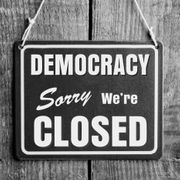
East v West: The Ideological Front

The dichotomy between the East and West is a timeless saga that transcends the realms of moral realism and physical battles. These two vastly di-polar tribes collectively amalgamate a vast number of ideologies and cultural values.

The West is a symbolical representation of the political philosophy of liberalism (classical and modern) embedded in the formation of democratic governments that represent their citizens in a parliament designed to promote capitalistic notions of individual prosperity, freedom and progression.

 Whereas, the East is the polar opposite, an ideological haven for those that seek equality of distribution that promotes collective success over strict individual greediness and hegemony. The proponents of structuralist ideologies inclusive of Marxist factions is a notable characteristic of the Eastern identity.

Despite the vivid duality, one ideology cannot thrive without the other. The presence of one’s own philosophical rival is key to driving the economic success of the most powerful stakeholders in both corners of the world.

The Modernised World

The modernised world of inter-connected nations has enunciated the plethora of differences between the Eastern and Western worlds. The West dominates the Cultural Wars through the perseverance of digital media that spreads the values of hedonism, familial kinship and individual liberty. Whereas, the East promotes the spirit of conformity, social classes and partisanship through centralised media that promotes a singular entity as the source of truth for social morality and organisation.

Despite these opposing values, the modern world through the miracle of advancements in communication technology has the innate ability to emphasis with both sides of the fence. For the first time in modern human history, the East and West can understand and appreciate the ideologies, social structures and beliefs of the other without the need of an external entity to mediate such information.

However, this openness has an unintended side-effect. The visibility of each front’s proverbial “soul” has initiated the onset of cultural, social and economic subterfuge in an attempt to subvert the authenticity of the entities that provide power to the institutions of the East and West. 

Increasing Partisanship in the United States

The United States of America is the primal symbol of liberty, freedom and equality of opportunity in the modern world. Exemplified by the ‘checks and balances’ inherent in the structure of the federal government that are present in the legislative, executive and judicial branches. The USA has become more than a powerful, imperialistic nation on the global stage, but the cornerstone representation of the Western ideals that are cherished by Western Europeans, Australia and South America.

Since the initial bipartisan presidency of George W Bush (prior to the Afghanistan invasion and subsequent war on terrorism), the political identity of the United States of America has become increasingly fractured. The initiation of the Cultural Wars between the progressive left and conservative right has dissolved the common fabric between the two major parties of the democratic system. The initiation of social media as a channel of communication for the American populace has allowed the forces of anarchy, chaos and subversiveness to rear their head.

As a result, the Western world has become disenfranchised by the formerly indestructible symbol of liberty and equality. As the ideas, values and thoughts of her own citizens become increasingly volatile with the left skewing further to the socialist embers of her former enemy in the Soviet Union, and the conservative right falls further to the depths of militaristic fascism and overt patriotism that consumed Nazi Germany in World War 2.

Loss of Freedom and Liberty

Throughout the tenure of modern history, the common political values of mutual respect and civil debate stood steadfast despite theological, ideological and economical disparity. However, the commercialisation of the political dimension in the 21st century through the capitalisation of the broadcasting industry has led to a vacuum of unbiased, neutral freedom of thought. The absence of a valid and respectable centrist entity is a major contributor to this gradual degradation of the social connections between the left and right.

The view of both elements of this divide is that the very fact that the existence of a disparity in ideology is a testament to the success of the American system of liberty and freedom. This view is remarkably ignorant of the destruction of the centrist belief in the existence of a ‘balancing mediator’ that can conciliate the differences between the cultural entities of the West. The vacuum of rationality, objectivity and logos (logical thinking over emotion) is the defining symptom of an ideology in the process of eternal separation and division.

As the rational elements of the West continue to fade away into the history books. The very freedom of speech, assembly and thought will disintegrate into the emotional frontiers of both sides of the proverbial fence. The fabric that held everything together, and wrote the Declaration of Independence will be forgotten, and the emergence of the Eastern values of emotional conformity, elitism and suppression of incompatible thought will prevail in the homeland of the free. Inevitably, spread to the body of the West in Europe, Australia and South America.

The East is the New West

Like any ideological war, the fronts of battle are not fought in the physical realm and are not tied to a specific moment in time. The slow dissolution of the fundamental Western values is a timeless process that was sewn with the introduction of classism, elitist control of media and technological suppression of religious and heterodox scientific polity in a supposed secular world.

The world is slowly changing. Many may not see it.

The West is becoming everything it sought to destroy. Like any self-fulfilling prophecy, the result is exactly the outcome that was unacceptable in the first place.

By Daniel Dell’Armi
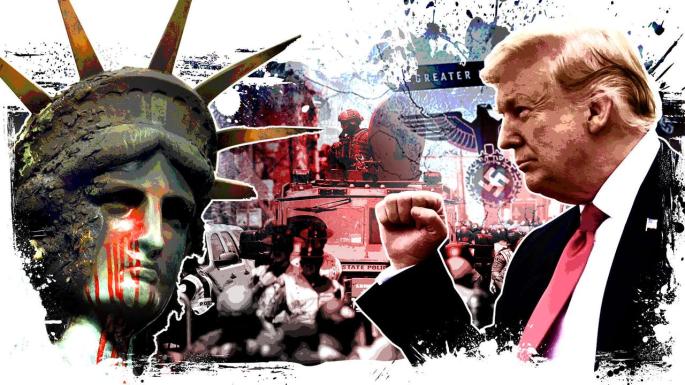
Ideological Warfare: The Divided States of America

The United States of America was the frontier of liberty within the world as we know it. The first modern nation to establish a constitution, independent of monarchial or autocratic chains, that represented the sovereignty of the people. Its people galvanised by the common values of civil liberty, prosperity and welfare. Why has this shared belief dispersed into a physical and political warzone of ideologies?

To understand the current climate within the USA, it is imperative to empathise with the different ideologies that collide in the nation. In the most simplistic framework, the political landscape is divided into a progressive, and opposing, conservative wing. These ‘wings’ are a dichotomy, or the so-called unbreakable duo. Ying and Yang. One cannot exist without the other, and both will continue to exists whilst the other survives.

The progressives strive for changes and improvements to the institutions within the nation, no matter the cost. Whilst the conservatives commit to stability and continued legitimacy of the executive, legislative and judicial branches that bind the American society together, at the expense of progression.

The progressive wing embodies a bucket of different beliefs that ultimately promote the increased welfare of all people unilaterally. Usually through social welfare programs such as Medicaid, ObamaCare and NGOs such as Planned Parenthood, as well as limiting the power of wealthy individuals and corporations. Whereas, the conservative wing represents the various values that strengthen representative institutions (government, religions, community groups) that are regulated by the people. This is achieved through the financial support of law enforcement and diminishing the tax burden for citizens and small-medium businesses.

Contrary to popular belief, these wings have changed political allegiance drastically over-time. The progressive wing was represented by the Republicans (and Whigs before them), their first presidential leader being Abraham Lincoln. His anti-slavery approach and determination to build public infrastructure epitomized his progressive mantra. Whilst the conservative wing was dominated by the pro-slavery Southern Democrats.

The first physical battle of the progressive and conservative wings manifested in the Civil War. The progressive Republicans determined to free the enslaved African American population in the South. Willing to literally die for change and destroy the institutions that permitted the archaic practice to thrive. As the Confederacy and the conservative Southern Democrats battled to maintain the autonomy of their own institutions. The cost? 618,000 human beings.

In the aftermath of the Civil War, the make-up of the dominant political parties transformed into the parties we know today. Of course, the conservatives retain power in the Republican party, whilst the progressives exercise their influence through the Democratic platform. However, the most important lesson is that progression and conservatism do not have the same face, they change and adapt like chameleons to the political environment around them.

As the political landscape became popularised with the election of Ronald Regan. The Democatic and Republican parties began the second weaponisation of progression and conservatism. Political elections became corrupted by frivolity on both sides, driven by toxic campaigns designed to undermine the the core identity of the opposing power. Lobbyists bet on a winner through donations, like a sport. Political activists became guerilla warfare experts, striking their opponents with timely public protests to derail campaigns. As the notion of political chivalry died with a decaying nation.

This can all be seen in the light of day in the previous election, as Donald Trump championed the unspoken conservatives and Hillary Clinton rode on the passionate voices of a new, progressive generation. A divisive campaign on both sides militarised the conservative and progressive wings into combative forces determined to dismantle the other without the thought of consequence. Powerful media monguls glorified the battle into a noble and just war on their respective opposition. CNN, MSNBC and other mainstream outlets on one side; and Fox News with the assistance of right-wing social media news platforms bringing in the competition.

The death of George Floyd, was a catalyst that has renewed the war onto a new front. Protests in the name of progression have spread across many states in the USA, with the nucleus in Minnesota, Los Angeles and New York. Law enforcement has become the embodiment of the conservative wing, protecting the integrity of the institutions that provide liberty to the population. As the progressive protesters stand in unity, exercising their own liberty to battle against the oppression of not only the African American community, but also those lost within the system without a voice. This is no longer about the unjust and horrible death of an African-American man in police custody. It is war of two ideologies, an unofficial Civil War.

This is the Divided States of America. A country founded on liberty. Liberty’s children, progression and conservatism are fighting the eternal sibling rivalry.Who will win? Not the people. As evident in history, the only winners of any war are those that fund both sides. The TV broadcasters, corporations, corrupt NGOs and foreign powers.

As the forces of progression and conservatism timelessly collide, the real villains escape into the darkness without accountability. Can the American people spot them in time?

Daniel Dell’Armi

Death of Democracy

Democracy is the defining achievement of humanity. The representation of the intellectual evolution of a complex species. The erosion of the simplistic notions of natural selection survival, and transition into a self-aware community of living organisms.

Ancient Period

Originally, created by the Athenians circa 5000 BCE, this form of government is a rare occurrence throughout human history. The dominance of authoritarianism, aristocratic societies, autocracy and theology (fundamentalism) is a common theme throughout modern and ancient human history.

The Ancient Egyptians, the primordial civilization, redefined the meaning of innovation. The Great Pyramids, agricultural reformation on the Nile and promotion of trade. This kingdom exercised structuralism exclusively through theism. The Pharaoh, the living representation of the gods, enforced the laws of the metaphysical forces through a centralized government.

The Ancient Roman Empire tweaked this blueprint with a few minor changes. The polytheistic premonitions and subservient population remained. Whilst political power channeled through the Emperor, acted as the executive branch in an autocratic world. This provided the catalyst for the rise of slave-based economies, free trade and feudalistic societal organization that would dominate Europe for centuries to come.

In an economic sense, the eternal love for the centralized distribution of power in a government system is a tantalizing prospect. This encompasses the narrative that a single entity can control the outcome of several situations. Thus, in the event of an undesirable situation., the ‘visible hand’ can reallocate resources in order to maximise output for society.

As the fruits of authoritarianism became clear throughout the ages. Its success and prominence grew with each generation. Exaggerated by lack of education, largely agrarian communities, familial inheritance and militarization of national borders. A vicious cycle developed that could not be broken by subservient populations. Many would see authoritarianism as prosperous for humanity, a necessary sacrifice for the survival of ‘enlightened’ civilisations.

The Ancient Greek society, the birthplace of modern philosophy, literature and arts. As the supreme outlier in the Athenian times, developed a revolutionary concept. A representative democracy. A concept so civilized in a time dominated by realist policies of strength and might over national enemies. However, deeply flawed by the restricted representation of women, disabled and marginalized in society.

As a fleeting light in the tunnel of time in the ancient period of human civilization. The Ancient Greek society dissolved into the authoritarian whirlpool of war. The Macedonians, Persians, Romans and numerous other sovereign states eroded the fabric of the democratic society. As mighty rulers assumed control of the autonomous Greek governments and transformed them into a puppet of more powerful empires.

Modern Period

Despite the appraisal for the Enlightenment and Renaissance era in the late Middle Ages. The real source of change for the governance of humanity was the Industrial Revolution.

The manufacturing phenomenon of the 17th Century is the primary catalyst for the drastic transformation of human civilisaitons. Compounded with the innovations of the electricity, telephone and superior modes of transport (trains). The Industrial Revolution became more than a dynamic, post-Ancient era for human intelligence in manufacturing.

A redefinition of the structure of the global economy. The agrarian dominance in the Ancient times were soon to be forgotten. The value of the working class would increase astronomically as their skillset became invaluable to the manufacturing process. The feudalistic system of farming in the Western European nations would slowly dismantle as the lower classes became more educated and skilled in society.

The arrival of the ‘middle class’ indicated a shift in the power distribution within society. Most notably the power of the elite became diminished as the need for innovative, intelligent and productive workforce to meet the demand of industrialization became apparent. The sovereignty of the populace became imperative to the progression of society. No longer did the elite possess the supreme sovereignty to decide the future of civilisation, rather the individual possesses one’s own sovereignty.

Contemporary Era

Hence, the post-modern era of the digital world that is intertwined in a globalized economy. The rights of the everyday human are enshrined in the legal documentation of national constitutions and sometimes in ratified ‘Bill of Rights’. Not to mention, the implementation of statutory law that prevents discrimination, stereotyping, slavery of any kind, defamation and involuntary marginalization of peoples.

These rights and freedoms represent the victories over a timeless battle between the impoverished ‘middle’ and ‘lower’ class and the elite. The implementation of modern democracy is a testament to the progression that humans as a network of intelligent beings have made. The very ability to decide one’s own future is a gift and privilege. Modern representative democracy with limited restrictions on access for citizens is the very foundation of this moral philosophy.

The executive, judicial and legislative branches act as ‘checks and balances’ for modern democracy. The various parliaments across sovereign lands are bound by the duty to debate the acceptance of ‘bills’ into legislation in often multi-party systems. The complimentary legal institutions uphold these laws in the form of hearings, trials and appeals that are bound by a jury or appropriate representative. Whilst the executive branch binds the population together as the pinnacle of leadership and responsibility for those less fortunate in society.

The federal, state and regional governments are autonomous and decentralized to disperse the influence of the elected and unelected officials in the public domain. Therein, not one parliament can dislodge the proceedings of another without due course.

However, despite the innumerable amount of freedom individuals as private entities retain in contemporary society. There is an alarming rise in authorial institutions that blatantly disregard and undermine the values of democracy.

The increased influence of the executive branch in Australia is a particular concern for those with keen political eyes. The development of a ‘National Cabinet’ in the wake of the Covid-19 crisis is a very bright red flag. The cabinet has the full ability to implement social distancing restrictions using the ‘Public Health Orders’ supported by the ‘Public Health Act 2010’.  The procedures associated with the legislative branch are effectively rendered useless. Under the guise of the priority of public health.

This begs the question of: when do we classify a situation as a ‘public health’ crisis? This is normally deemed by the executive branch itself, on the orders of experts in the field. This represents a conflict of interest since a crisis only provides the executives more power. The lack of independent oversight by a committee that represents the population is a severe flaw.

A possible solution is the implementation of a ‘postal vote’ system for situations that may invoke a ‘national emergency’ or ‘public’ crisis. This would transfer the power from the executive branch to the population through the legislative branch. Clearly, the value of expert opinion would need to be accounted, however the final decision should be laid at the feet of the population, rather than unelected officials.

To make this point even more potent, we can attribute some of the core values of the Covid-19 crisis to ongoing issues within society. For instance, the public health domain can be contrasted to the digital domain of the World Wide Web (WWW). This is a public domain that has its own set of rules and is loosely government by the legislative branch.

The development of the internet has led to the invention of social media platforms. These platforms are designed to provide a medium to express individuality in a real-time context instantaneously. Despite the promotion of these entities as merely platforms, they have incorporated ‘community guidelines’ that act inauspiciously as laws for the digital society. These guidelines, like the organization of modern society, are enforceable by a judicial committee and created internally by senior stakeholders. Since these stakeholders do not represent the public, rather its profit-maximizing stakeholders. This set-up is more akin to an oligarchic society.

Since social media plays such a pivotal role in the cohesion of human civilisation. The fact that these platforms invoke the authorial notions of the ancient and pre-modern times is a concern.

The Future

 Humanity has struggled with an imbalanced distribution of power since the dawn of time. This balance has become more even since the Industrial Revolution. However, there seems to be a shift again towards elitism.

The rise of conglomerates such as Google, Facebook, Microsoft, Apple, Nike and Disney (and many others) is macrocosm for a greater issue within the ‘new’ era of society. These companies are not bound by the democratic laws that maintain the freedom of individuals in a dynamic world. Not to mention, the increasing centralization and militirisation of the executive branches of government.

Whilst broadcasting channels will continue act in their own self-interest and fail to provide an effective platform to voice these concerns. It is inevitable that the elite will become integrated into the bowels of the IT and public institutions that dominate the decisions made in the globalized world today.

The true question remains: are we too late to stop it?

Daniel Dell’Armi

The Moral Authority of Social Media

Global communication has evolved dramatically in the new millennium. The omnipotence of social media as a platform is not only responsible, but accountable, for the distribution of information in a technocratic society.

Social media is a quasi-virtual dimension that exists independently from the physical world of communication. Communication throughout the modernised world has been mainly dominated by hardware. Letters, postcards, radio, television, fax. These channels of communication are easily regulated and monitored by figures of authority. As potentially valuable content is missed by the public; but inflammatory rhetoric is by the same measure unlikely to see the light of day.

However, the rise of social media has completely transformed this idea of regulated communication. Anyone at any time can publish their thoughts, with the only limit being their imagination. The innate desire to impose one’s ideals, beliefs and values on others is finally actionable by the population without strict regulation of authority. This is power that no one in human history has exercised before. It is this insatiable lust to be recognised and appreciated by the masses that has led to the monopolisation of social communication.

The ability to instantaneously inform, promote and educate is unprecedented power. Unfortunately, there are only a few providers in this oligopoly. Facebook, Instagram, Twitter and SnapChat epitomise the dominance of social media in the daily lives of ordinary citizens. They represent the collective power of users and act as accelerants for equally good and bad ideas.

These profitable organisations employ their own self-regulated ‘code of conducts’ and ‘community guidelines’. These rules are the ‘laws’ of speech in the dimension of social media. Unlike the federal and state judicial systems that govern the realms of free speech in the physical realm. The makers of social media laws are an unseen group of corporate individuals. Their goal, as for any commercial organization, is to protect their profitable interests and advertiser-friendly platforms.

Many will argue that the mere existence of such laws on social media restrict the basic right of freedom to speak one’s mind without consequence. Whereas, others will argue that these laws are the cornerstone of a safe and inclusive community, which represents the statutory laws implemented by western society. In either case, the moral authority of verbiage posted on social media is determined by institutions created to make a profit in a capitalistic economy.

This leads to a far large systematic question: are we best governed by the laws of national governments or profitable institutions? The fracture between these two moral authorities can be seen all around the world today. Celebrities and citizens alike have lost their livelihoods and careers due to immature, racist, misogynistic and discriminatory remarks on social media. On the other hand, the judicial system operated by national governments condemn those to the same fate that exercise discrimination in the workplace, public and privately.

What is the difference between these two authors of moral authority? Governments in westernised culture employ ‘balance and checks’ in the form of a jury or impartial judge to determine the innocence of any one person in a civil case. As well as implementing a long and formal process that takes weeks to months to complete. Contrastingly, social media corporations use software algorithms to catch any misguided behavior online. In some cases, they will immediately warn or ban the user without an internal review by its team.

It is this very conflict between the authority of government and the privatised world that will continue to dominate morality for years to come. Facebook and its companions will remove the voices of those they deem guilty of hate speech and detestable behavior. Whilst the democratic judicial system will punish those guilty in the perceived just eyes of the written and common law.

As a human race, we need to ask ourselves an existential question that will define our existence for centuries to come. Are we better under the eyes of the common law or the code of a computer?

Daniel Dell’Armi